English
 Русский
  ქართული
 Login
Login 










 account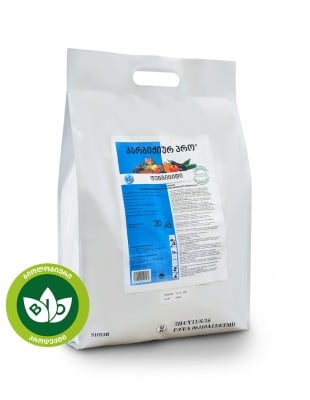
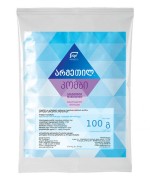
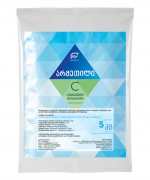
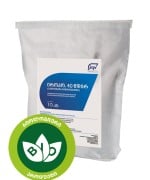
KARBICURE SP
Mode of Action:
When in direct contact with fungi, Karbicure works rapidly through a combination of osmotic pressure, pH and specific bicarbonate/carbonate ion effects. Inhibits fungal mycelial growth and causes total collapse of spores within one minute. Dehydration of fungal hyphae treated with Karbicure. KHCO₃ is a strong buffer, maintaining the plant surface mildly alkaline. This disrupts the hydrolytic enzymes released by fungi to infect the plant. Bicarbonate anion HCO₃⁻ is the ‘active’ moiety. Free water plays a key role in allowing the dissociation of the active anion component.
Resistance Prevention and Management
The repeated use, on the same plot, of preparations based on active substances of the same chemical family or with the same mode of action can lead to the appearance of resistant organisms. To reduce this risk, the user must first reason about agronomic practices and respect the conditions of use of the product. It is advisable to alternate or combine, on the same plot, preparations based on active substances from different chemical families or with different modes of action, both during a growing season and in the rotation.
Do not mix with the following products or types of products in spray mixture:
- Acidic products
- Avoid associations with oxychloride and cuprous oxide (except on hops). A combination with copper hydroxide or copper sulphate-based specialities (Bouillie Bordelaise formulation) is possible.
- Emulsifiable Concentrate (EC) Formulations
- Foliar fertilisers
Preparing the Slurry:
Fill the sprayer tub three-quarters full and start stirring. Add the amount of KARBICURE SP® needed, then top up with the necessary volume of water, maintaining the stirring.
It is advisable to pour KARBICURE SP® very slowly into the tank, or to pre-dilute it and pour it at the end of the filling, respecting a maximum concentration of 15% for the pre-dilution to be effective.
Apply immediately, keeping the agitation running during treatment.
Table of Permitted Uses
|
CULTURES |
Target | Dose maximum d’emploi | Maximum number of applications | Stade d’application/ conditions d’emploi | Pre-harvest interval (DAR) | Interval between applications |
| Trees and shrubs |
Powdery mildew |
5 kg/ha |
6 / year |
- |
- | 7 days between full application |
| Artichoke*, Cardoon* | Powdery mildew | 3 kg/ha | 8 / year | Between the stadiums BBCH10 et BBCH69 | 1 day | 7 days |
| Blackcurrant, Redcurrant | Powdery mildew | 5 kg/ha | 8 / year | - | 1 day | - |
| Cucumber, Zucchini | Powdery mildew | 3 kg/ha | 8 / year | Between the stadiums BBCH10 et BBCH69 | 1 day | - |
| Floral and Green plants | Powdery mildew | 3 kg/ha | 6 / year | - | - | 7 days between field, greenhouse and tunnel applications |
| Strawberry | Powdery mildew | 3 kg/ha | 8 / year | - | 1 day | - |
| Framboisier, Mûrier | Powdery mildew | 5 kg/ha | 8 / year | - | 1 day | - |
| Hops | Powdery mildew | 5 kg/ha | 5 / year and /cycle cultural | BBCH31 to BBCH89 | 3 days | 8 - 14 days |
| Melon, Watermelon, Pumpkin and other cucurbits with inedible skin |
Powdery mildew |
3 kg/ha |
8 / year | Between the stadiums BBCH10 et BBCH89 |
1 day |
7 days, also allowed under shelter |
| Peach, Apricot, Nectarine | Moniliosis | 5 kg/ha | 3 / year | BBCH79 to BBCH89 | 1 day | 3 days |
| PPAMC | Powdery mildew | 3 kg/ha | 8 / year | - | - | - |
| Pepper | Powdery mildew | 3 kg/ha | 8 / year | BBCH10 to BBCH89 | 1 day | 7 days between greenhouse and tunnel applications |
| Apple tree | Speckle | 5 kg/ha | 5 / year | BBCH07 to BBCH89 | 1 day | 8 days |
| Seed Holders: Vegetable, PPAMC and Floral | Powdery mildew | 3 kg/ha | 8 / year | - | - | - |
|
Rose |
Powdery mildew |
5 kg/ha |
6 / year | BBCH41 to 49 for applications/sheets BBCH51 to 59 for applic./flower bud |
- | 7 days between greenhouse and tunnel applications |
| Tomato, Eggplant | Powdery mildew | 3 kg/ha | 8 / year | BBCH10 to BBCH89 | 1 day | 7 days between greenhouse and tunnel applications |
| Vine | Powdery mildew and grey mould | 5 kg/ha | 8 / year | - | 1 day | - |
| Mushroom | Induction of fruiting | 5 g/m2 | 2 per cycle | At the end of the post-incubation period | 3 days |
|